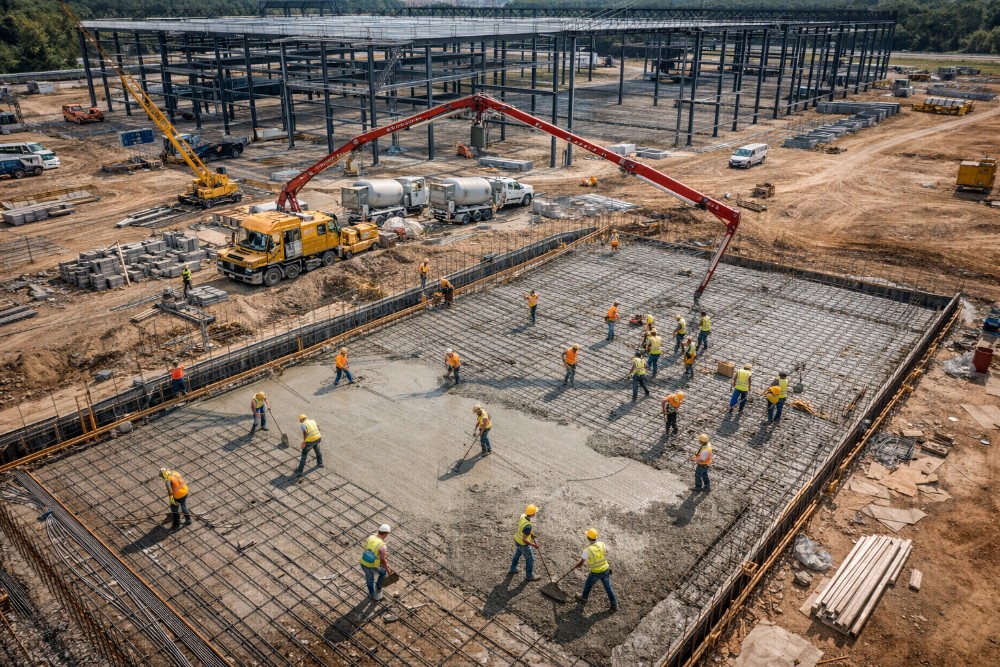

Concrete looks solid almost immediately after it’s poured, which leads to a common misconception: that it’s ready for full use as soon as it’s set. In reality, curing is a weeks-long chemical process, and rushing it is one of the more expensive mistakes we see on job sites.
What’s Actually Happening During Curing
Concrete gains strength through an ongoing hydration reaction between cement and water, not simply by drying out. That process continues for weeks after the pour, with the concrete reaching most of its design strength around 28 days — not the day it looks solid to the eye.
What Rushing Curing Actually Risks
- Surface cracking from moisture loss before hydration is complete
- Reduced long-term structural strength if load is applied too early
- Surface damage from foot or equipment traffic before adequate strength develops
- Weakened bond in cold weather if temperature isn’t properly managed during cure
A slab that looks ready on day three and a slab that’s actually ready on day twenty-eight look identical to the eye — which is exactly why curing has to be managed by schedule, not appearance.
How We Manage the Process
We schedule load-bearing activity — racking installation, heavy equipment, or structural framing — around actual cure timelines, not around how the concrete looks. In cold weather, we use curing blankets and adjusted mix designs to protect strength development instead of hoping ambient conditions cooperate.
The Takeaway
Concrete curing isn’t a waiting period to rush through — it’s an active part of the structural process. Respecting the timeline, especially on projects with heavy early loads, is what keeps a slab performing correctly for decades instead of showing problems within the first year.